

 TradeBrix
 February 10, 2026
 5 min read
Maximizing ROI with Targeted Marketing for Prop Firms in 2026
Maximizing ROI with Targeted Marketing for Prop Firms in 2026

Introduction
In 2026, marketing spend alone does not determine growth. Precision does.
Customer acquisition costs vary sharply by channel. Cold paid traffic can sit between $150 and $400 per challenge purchase. High-intent paid search may range from $120 to $250. Referral-driven acquisitions often land much lower, sometimes between $20 and $60. Organic search, once established, can produce effective acquisition costs under $80 over time.
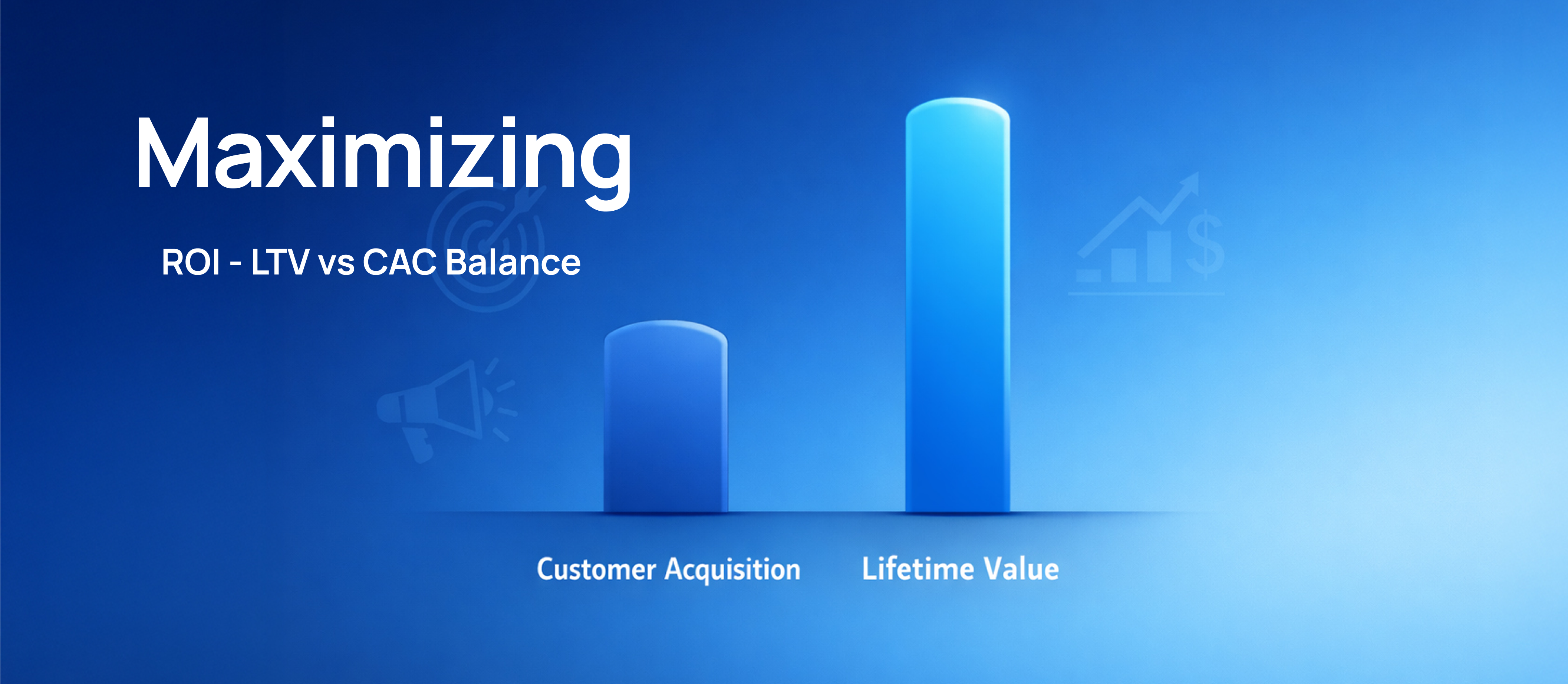
The difference between profitable and unprofitable firms often comes down to one relationship: lifetime value compared to acquisition cost.
Firms maintaining a 4:1 LTV to CAC ratio operate sustainably. Those approaching 6:1 create room to scale without constantly increasing budget.
This guide explains how to structure targeted marketing in 2026, which metrics matter most, how to allocate budget intelligently, and how PropBrix by TradeBrix helps you connect marketing spend to actual trader performance.
The Metrics That Actually Matter
Many firms track clicks and impressions. Fewer track trader quality.
What determines ROI is not volume, but what happens after signup.
Customer Acquisition Cost
Total marketing spend divided by completed challenge purchases. This must be measured by channel rather than blended into a single average.
Cold traffic behaves differently from affiliates. Search behaves differently from community referrals.
Lifetime Value
Lifetime value reflects total revenue generated from a trader across evaluation fees and any profit share participation.
Traders who remain funded for six months or longer typically generate significantly more value than one-time evaluation purchases.
LTV to CAC Ratio
A 4:1 ratio supports stable growth. Ratios closer to 6:1 suggest strong channel efficiency.
Anything below 3:1 usually signals that either acquisition costs are too high or retention is too weak.
Payback Period
How long it takes to recover acquisition cost from trader revenue.
Many firms aim to recover CAC within three to four months. Longer payback periods increase risk.
Pass Rate by Source
A channel that produces large signup volume but low pass rates can quietly erode profitability.
Tracking pass rate by acquisition source is essential.
Retention by Cohort
Three- and six-month funded continuity reveals which channels attract disciplined traders rather than promotional traffic.
Retention often matters more than initial pass rate.
Targeted Marketing Strategies That Improve ROI
Broad targeting increases spend without improving quality. Precision improves both.\
Segment by Trader Profile
Instead of targeting broad “trading” interests, build audiences based on traders who passed and remained funded for at least three months.
Segment by geography and asset class. Futures-focused traders behave differently from crypto-focused ones.
Focus on High-Intent Search
Keywords such as “futures prop firm payout speed” or “two-phase challenge comparison” convert differently from general trading terms.
High-intent queries typically produce better pass rates than awareness-level keywords.
Implement Clean Source Tracking
Every campaign should carry clear UTM tagging. Referral systems should be tracked end-to-end.
Without source-level data through to funded status, marketing decisions rely on assumption rather than evidence.
Strengthen Affiliate and Referral Programs
Mature firms often see 30 to 60 percent of signups coming from affiliates and referrals.
Recurring commission structures commonly sit between 10 and 20 percent of revenue, depending on the model.
Traders frequently refer to peers with similar discipline levels, which can improve pass rates and retention compared to cold traffic.
Build Organic Visibility
Long-tail searches such as “prop firm pass rate transparency” or “funded account payout timeline” often convert well.
Organic traffic compounds over time. Paid campaigns stop producing results the moment spend stops.
Channel-Level ROI Benchmarks
| Channel | Typical CAC | Typical Pass Rate Range | LTV:CAC Range |
|---|---|---|---|
| Organic SEO | $30–$80 | 12–25% | 5:1–6:1 |
| Affiliates / Referrals | $20-$60 | 15-30% | 5:1–6:1 |
| Paid Search | $120-$250 | 8-18% | 3:1–5:1 |
| Cold Paid Social | $150-$400 | 5-12% | 2:1–4:1 |
| Email / Nurture | $20-$60 | 15-30% | 5:1–6:1 |
These ranges reflect structured, optimized environments rather than experimental campaigns.
Budget Allocation Approach in 2026
- 35 to 45 percent toward affiliates and referrals
- 25 to 30 percent toward SEO and content
- 15 to 20 percent toward paid search
- 10 to 15 percent toward retargeting and email nurture
- Controlled allocation toward paid social testing
Budgets should be reviewed monthly and adjusted based on pass rate by source and funded retention.
How PropBrix Supports Smarter Marketing Decisions
PropBrix by TradeBrix does not stop at showing you signup volume.
It shows you which marketing channels lead to traders who pass, stay funded, and generate revenue.
- Source to challenge purchase
- Challenge to pass rate
- Pass to funded status
- Funded to retention
- Retention to profit share
Affiliate dashboards automate commission tracking. Source-level attribution highlights which channels attract disciplined traders rather than short-term promotion-driven signups.
Marketing becomes measurable beyond surface-level metrics.
Common ROI Mistakes
- Scaling paid traffic before confirming pass-rate quality.
- Paying affiliate commissions without monitoring downstream retention.
- Blending all channels into one average CAC number.
- Ignoring cohort analysis.
ROI improves when acquisition decisions are tied to performance outcomes rather than top-of-funnel metrics.
Conclusion
Maximizing ROI in 2026 requires discipline. The firms that scale sustainably prioritize high-quality acquisition channels, measure pass rates by source, and focus on retention rather than volume alone.
PropBrix by TradeBrix helps you see the full picture, from marketing source through to funded trader performance, so capital can be allocated with clarity.
Book a demo with TradeBrix to understand how channel-level visibility supports smarter growth.
Featured resources

Introducing Our Rewards System: Powering the Next Phase of Prop Firm Growth
Discover how TradeBrix’s new Rewards Points System helps prop firms increase conversions, improve retention, and scale sustainably without relying on heavy discounts.


How to Start a Prop Firm in 2026: Step-by-Step Guide with Tech Essentials
Step-by-step 2026 guide to launching a prop firm: market opportunity, business models, compliance, technology stack, challenges, marketing, payouts, and scaling with TradeBrix.

The Role of Dashboards in Prop Firm Success: Features to Look for in 2026
Discover why prop firm dashboards matter in 2026, key admin and trader features to look for, and how PropBrix by TradeBrix delivers real-time risk visibility at scale.

Legal Compliance for Prop Firms in 2026: Navigating Regulatory Reality Without Slowing Growth
2026 guide to prop firm compliance: KYC/AML, marketing rules, jurisdiction choices, payout transparency, and how PropBrix by TradeBrix simplifies compliance at scale.